Trained measurers review every roof you pin using satellite imagery, not an algorithm’s guess. Here’s exactly what happens between your pin and the price on the mailer.
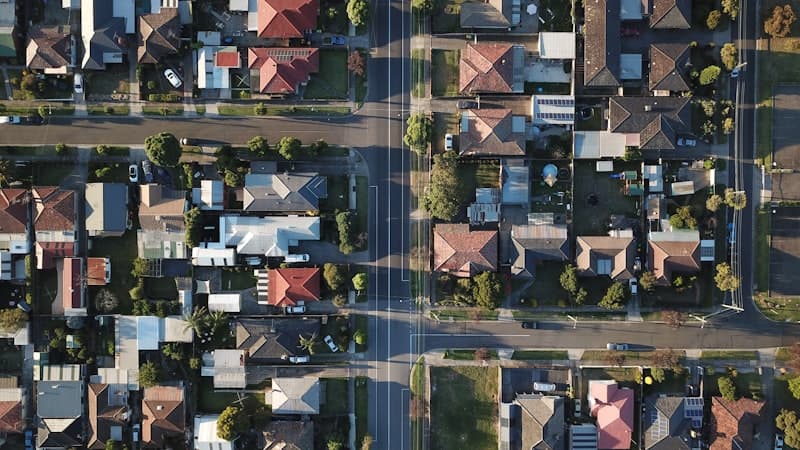
Every address you pin lands in front of a real person on our measurement team, working from high-resolution satellite and aerial imagery.
The measurer works out the roof’s total size in squares and its average pitch from the imagery: the two numbers that drive a real roofing price, not a guess from the flat footprint.
Real crews cut shingles at ridges, valleys, and edges. We set a 6–15% waste factor (based on the roof’s complexity) the same way your estimator would, so the price on the mailer reflects what the job actually takes.
Last step: the clearest available shot of the house, picked by hand. That photo goes on the front of the mailer. It’s the reason homeowners stop and look.
Accurate enough to put a real, defensible price on paper, not a teaser rate that falls apart at the kitchen table.
Square footage, average pitch, and a 6–15% waste factor included, applied on top of your per-square pricing, which you enter pre-waste. You still confirm scope on-site before contract, exactly like any bid you write yourself. The difference is the conversation starts with a homeowner who already saw a realistic number and called you anyway. That’s a buyer, not a browser.
This is where a human beats an algorithm. Judgment calls get made by someone with judgment.
Heavy canopy hiding a section? The measurer works from multiple imagery angles and passes. If the roof genuinely can’t be measured with confidence, we flag it instead of guessing.
New construction or a recently changed roofline can lag in satellite data. When imagery looks out of date, we cross-check against street-level views before measuring.
Panels get noted, not painted over. A roof with solar is a different job, and the measurement reflects what’s actually up there.
Steep pitches, multiple levels, and cut-up roof plans take longer to size up, but they don’t get skipped. The pitch read and the waste factor reflect the roof’s real complexity.
The measurement lands on page 1 of the estimate: square footage, average pitch, and your price.
